Test the alpha-gal question withclearer timing, history, and context.
Alpha-gal reactions are often delayed, but not always. Some people have earlier gastrointestinal symptoms, some react overnight, and cofactors like exercise, alcohol, NSAIDs, illness, stress, and meal composition can change timing and intensity.
AlphaGalTest is the focused Allerim pathway for people trying to answer one question first: does this pattern fit alpha-gal strongly enough to test and act on, or does it need broader immune review first?
Keep the first decision simple.
Start with Alpha-Gal Plus for the core alpha-gal question. Choose Alpha-Gal Deluxe only when you already know you need broader mammalian or carrageenan context.
Not sure alpha-gal is the whole story?
Use the focused alpha-gal path when tick exposure, delayed reactions, or mammalian-food symptoms are the main question. Use broader Allerim testing or consultation when symptoms span many foods, environmental triggers, existing results, or a complex medical history.
Recognition frame
Testing decision
When alpha-gal testing is the right first move
Use testing when the alpha-gal pattern is coherent enough to act on. Widen only when the story still needs broader context.
- Delayed night-time hives, flushing, GI symptoms, or mixed reactions after beef, pork, lamb, or other mammalian exposures.
- A tick-bite history or likely exposure makes the pattern more coherent, even if the bite was not noticed at the time.
- The reaction picture changes with alcohol, exercise, illness, stress, NSAIDs, or higher-fat meals.
- You need a clearer signal before changing diet, preparing for visits, or deciding whether to widen into broader immune review.
- There is no meaningful mammalian-food or tick-exposure pattern yet, and the reaction history is still too broad or inconsistent.
- The real question is broader than alpha-gal alone, such as multi-food reactivity, environmental overlap, or ongoing immune recovery.
- You mainly need recognition and practical context first, not an immediate panel purchase.
- Emergency-type reactions, throat swelling, trouble breathing, fainting, or severe chest symptoms still need emergency planning and clinician judgment first.
What results can clarify
Results are a signal, not the whole answer
Alpha-gal results help clarify whether the delayed or mixed pattern should be interpreted through an alpha-gal lens. They do not replace timing, history, cofactor review, or clinician judgment.
They help support or weaken the alpha-gal explanation when paired with mammalian-food timing, tick exposure, GI or night-time reactions, and practical follow-through.
They do not automatically explain every symptom, replace emergency planning, or remove the need to review cofactors and broader immune context.
Panel choice
Which Alpha-gal panel fits which use case
Keep the first decision simple. Start with the clearest core panel and widen only when the history still needs broader mammalian-food context.
The clearest first step for the core alpha-gal question.
Best when alpha-gal is the main question and you want the most direct first answer.
- Use when delayed, GI-first, or night-time reactions already point strongly toward alpha-gal.
- Best when you do not need broader mammalian-food or carrageenan context yet.
A broader alpha-gal follow-up panel that adds mammalian and carrageenan context.
Best when beef, carrageenan, or a wider mammalian-food question still needs sorting.
- Use when the core alpha-gal pattern is present but the surrounding food picture is still broader or less settled.
- Best when you expect the first decision needs more context before narrowing the plan.
What happens next
Alpha-gal testing still leads into the shared Allerim patient account.
Choose Alpha-Gal Plus or compare the alpha-gal panels.
Pay the amount due today before the order moves forward.
Complete required testing information and consent.
A provider reviews the order before fulfillment continues.
Your kit ships and your sample is processed through the shared Allerim testing workflow.
Results, positive-finding context, and a clinician-reviewed written report return to your Allerim account.
A Living Food Plan, sequential retesting, broader testing, or telehealth visit may be recommended later only when it would add clarity.
Pattern snapshots
What this pattern can actually look like
These are recognition examples, not diagnoses. They show why alpha-gal is usually easier to see as a pattern than as one isolated event.

It often starts with a tick bite
A tick bite can sensitize the immune system to alpha-gal and start a pattern that is easy to miss at first.

Reactions don’t happen right away
Symptoms often appear hours later, which is why many people never connect the reaction back to food.

Symptoms feel unpredictable
Skin, gut, breathing, and fatigue symptoms can rotate, making the pattern feel inconsistent from day to day.

Patterns are easy to miss
Delayed timing and mixed symptoms make alpha-gal easier to recognize as a pattern than as one event.

Context changes the reaction
Alcohol, exercise, illness, stress, and meal composition can shift the threshold and change how reactions show up.
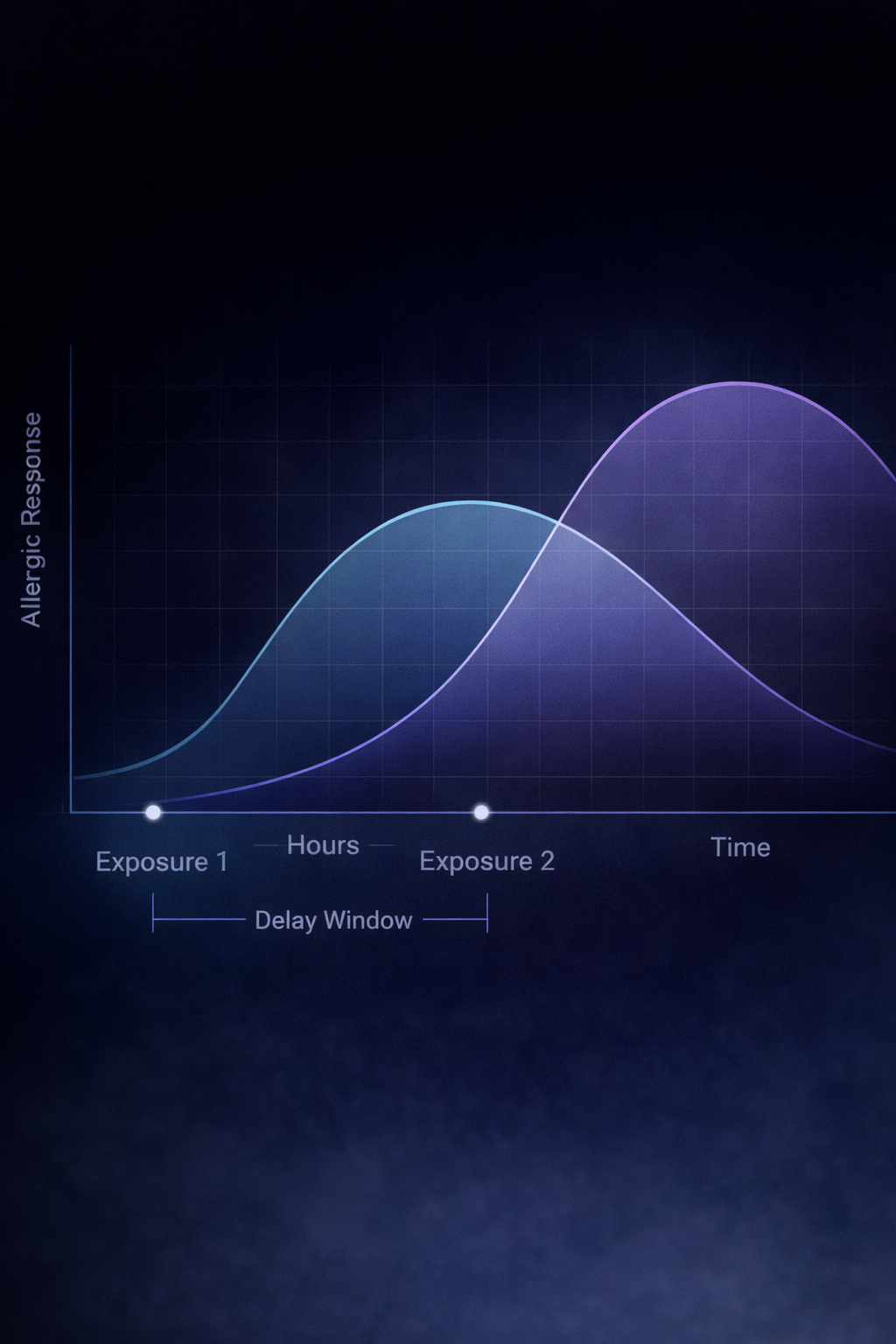
The pattern matters more than a moment
Alpha-gal becomes clearer when timing, repetition, and exposure history are reviewed together over time.

Clarity comes from interpretation
Testing is one signal. The real value comes from interpreting the result with timing, history, and cofactors.
News and living updates
Latest Alpha-gal News
Real-time research headlines plus an everyday living section for practical resources.
Why timing feels different
Why alpha-gal doesn’t behave like other food allergies
Delayed reactions and shifting cofactors make alpha-gal hard to spot without a longer view.
Signal over time
Alpha-gal responses can surge late, arrive early, or overlap — the pattern matters more than a single moment.
Start narrow if you need to. Widen when the pattern calls for it.
Alpha-gal can be the clearest first question, but not always the whole picture. The broader Allerim view brings foods, cofactors, symptom timing, and exposure patterns into one guided intake.
- Food-first intake that captures symptom timing, cofactors, and exposure patterns
- Personalized testing recommendations (not one-size-fits-all)
- Structured reports and follow-through inside the same portal
- Optional tracking over time when the picture needs to widen
Recognition
If this sounds familiar, you’re not alone.
Alpha-gal often looks like this — even when it doesn’t fit the textbook.
- “I react hours later — often at night”
- “Sometimes I get cramping or diarrhea within 20–30 minutes”
- “My reactions change from meal to meal”
- “My labs don’t always match how I feel”
- “Restaurants feel unpredictable”
- “I’ve been told it’s IBS, reflux, anxiety, or stress”
- “Things got worse after a tick bite”
- “Hives or itching show up hours after eating”
- “Fatty red meat seems to trigger worse reactions”
- “Flushing or swelling appears without a clear pattern”
- “Supplements or medications sometimes set it off”
- “Severe reactions without a clear cause”
How Alpha-Gal Reactions Actually Work
Alpha-gal doesn’t follow one timeline — and that’s why it’s so often misunderstood.
Reactions Don’t Follow One Clock
Some people experience early gastrointestinal symptoms — nausea, cramping, diarrhea, or reflux — within 30–60 minutes. Others develop symptoms hours later, often during the night. Many experience both, depending on exposure, dose, and cofactors.
Why Symptoms Feel Inconsistent
Alpha-gal reactions don’t look the same every time. They can appear as GI distress, flushing, hives, anxiety, brain fog, chest tightness, reflux, or sleep disruption. Alcohol, exercise, illness, stress, medications, and portion size can amplify reactions — or change how they show up.
Clarity Comes From Patterns, Not Single Events
No single reaction tells the whole story. Alpha-gal becomes clear when timing, repetition, cofactors, and immune signals are viewed together — over time, not in isolation.
Alpha-gal rarely announces itself clearly. It reveals itself through patterns.
Focused next step
Start with the alpha-gal question. Expand only if needed.
The right first move is usually a focused alpha-gal panel plus clinician-guided interpretation. If the pattern looks broader than alpha-gal alone, Allerim can widen into a larger immune review later.
Trouble breathing, throat swelling, fainting, severe chest symptoms, or suspected anaphylaxis should be treated as emergencies. This site and testing flow are not emergency care.